
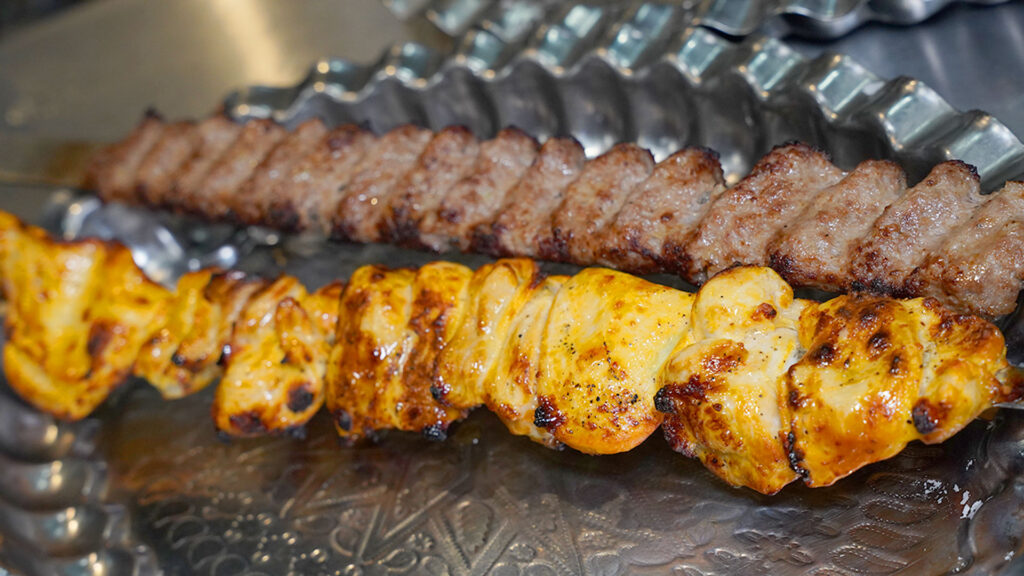
Kebab Koobideh (Kubideh)
The Royal Origins and Timeless Legacy of Iran’s Most Beloved Dish
Across the Middle East and Central Asia, kebab is more than a meal. It is tradition, pride, celebration, and craftsmanship. From royal feasts in ancient Persia to family gatherings in modern homes and restaurants around the world, few dishes carry the cultural weight and emotional connection that Kebab Koobideh does.
Beloved by Persians and admired across neighboring regions, Koobideh has earned its place as a culinary treasure that connects history to the present day. Today, guests at Iran Zamin Restaurant in Richmond Hill enjoy the same authentic taste that once graced the tables of Persian nobles and travelers along the Silk Road.
Where the Story Begins
Ancient Persian Fire and Hospitality
The roots of Koobideh stretch back thousands of years to ancient Persia. Long before modern kitchens and restaurants existed, Persian warriors, travelers, and nobles prepared meat over open flames. Sharpened swords or skewers were placed above fire pits. Lamb or beef was seasoned simply then cooked slowly to capture flavor.
The term Koobideh (Kubideh) comes from the Persian word Koobidan, meaning to pound or crush. Historically, meat was pounded by hand with a stone or wooden mallet, mixed with onion and salt, then shaped onto metal skewers. This technique produced a texture unlike any other kebab: tender, juicy, soft, and deeply aromatic.
Persia’s fertile lands and advanced agriculture made access to herbs, pomegranates, wheat, saffron, and livestock abundant. Food was considered a divine art. Meals were designed with balance and elegance. Hospitality was sacred. Serving kebab to a guest symbolized respect, honor, and generosity.
Koobideh and the Silk Road
A Culinary Ambassador
As Persian empires expanded, they carried their culinary knowledge across continents. Traders, scholars, and travelers along the Silk Road encountered Persian kebabs and carried the traditions home. Over time, regional variations developed. Turkish Adana kebab, Afghan Chapli kebab, Lebanese Kafta, and Armenian Lulah kebab all share ancient roots with Kebab Koobideh.
Yet Koobideh remains distinct thanks to three defining characteristics:
- Freshly minced meat
- Grated onion worked into the meat for tenderness and natural juice
- Seasoning designed to enhance the flavor rather than overpower it
Persian wisdom in the kitchen always prioritized balance, fragrance, and refinement. While neighboring regions sometimes added heavy spices, Persians preferred subtle elegance. This philosophy still guides authentic Koobideh preparation today.
From Royal Courts to Everyday Homes
During the Safavid and Qajar dynasties, kebab evolved into a national symbol of hospitality and celebration. Royal chefs refined the grinding and marinating process. Metal skewers replaced older tools. Recipes became formalized.
In traditional Persian homes, preparing Koobideh became an art. Families bought meat from trusted butchers. Onions were granted by hand. Children gathered around the grill. Garlic was added sparingly, turmeric and saffron provided warmth, and salt was measured carefully. Every detail mattered because every meal honored the guest.
Persian poets even referenced feasts of kebabs and rice in their verses. It was not only food. It was a way of life.
The Importance of Fire and Technique
True Koobideh is not simply minced meat. It is a handcrafted preparation that depends on skill. The chef must know:
- The right fat to lean meat balance
- How to knead the mixture to achieve elasticity
- How to spread the meat evenly onto skewers without breaking
- The perfect distance from flame for slow grilling
- How to infuse smoke without burning
This craft is passed from one generation to the next. Even today, Persian master grill chefs are respected for their technique and discipline.
Modern Koobideh
Still Rooted in Tradition
In contemporary Iran, Koobideh remains the most loved kebab nationwide. It is served at weddings, picnics, family gatherings, and eateries from Tehran to Tabriz, Gilan, Shiraz, and Kermanshah. Each region adds its own touch. Some use lamb. Some use a combination of lamb and beef. Some add parsley or saffron. Others preserve extreme simplicity with only onion and salt.
Wherever it is served, Koobideh remains the soul of Iranian food culture.
In restaurants like Iran Zamin, the preparation stays true to tradition. Fresh meat is ground daily. Onions are grated to release natural juice. The mixture is shaped by hand and grilled over open flame. There are no shortcuts. There is no compromise. Every skewer reflects heritage and family pride.
A Global Symbol of Iranian Identity
Persian communities around the world brought Koobideh to new countries, sharing its rich flavors with neighbors and friends. Today, people from many cultures enjoy Koobideh even if they do not yet know the long journey behind it. Social media and global travel continue to introduce new audiences to Persian cooking. The respect for Koobideh grows stronger each year.
In Canada, where multicultural dining thrives, Koobideh offers a warm taste of home for Iranians and a delicious cultural discovery for everyone.
Koobideh at Iran Zamin
A Timeless Experience
At Iran Zamin Restaurant in Richmond Hill, Koobideh is more than a dish. It is an invitation to taste history. It is comfort served with saffron rice, grilled tomato, and herbs. It is the warmth of Persian hospitality carried across years, oceans, and generations.
Whether it is your first time trying Koobideh or you grew up tasting it at family picnics in Iran, Iran Zamin brings that authentic moment to your table with pride and passion.