
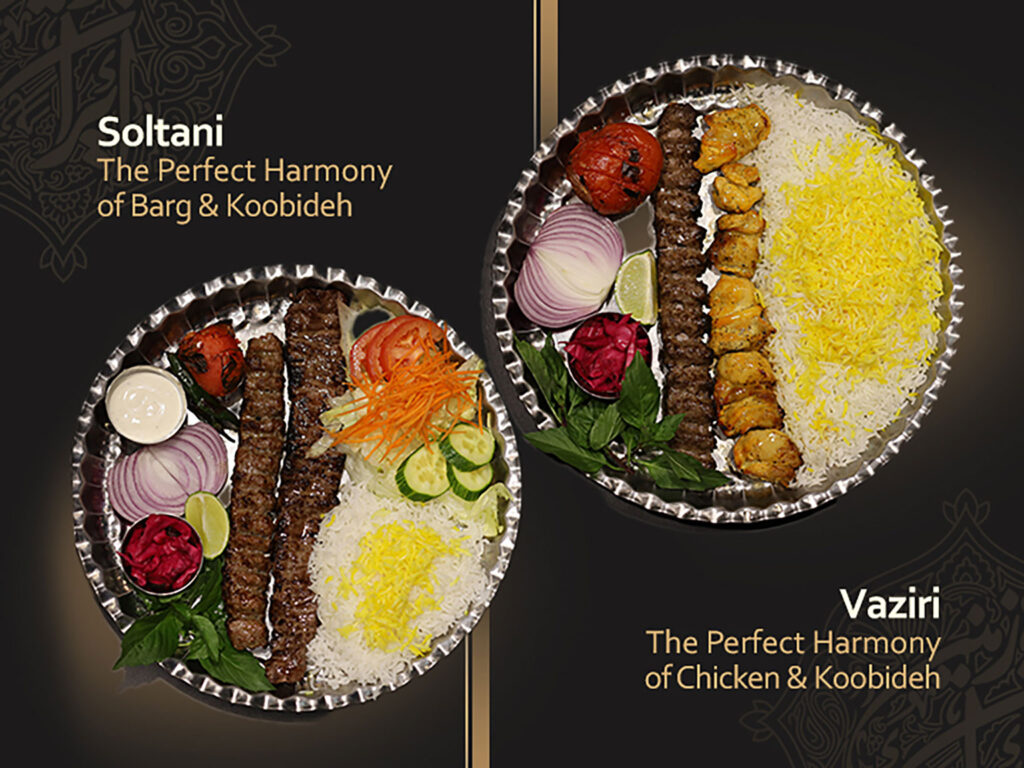
Persian cuisine is built on symbolism, balance, and hierarchy. Meals are not randomly assembled. Every combination of rice and kebab reflects intention, tradition, and even social meaning. Among the most iconic pairings in Persian food culture are Vaziri and Soltani. At first glance, both appear to be generous rice-and-kebab plates. In reality, they represent two distinct philosophies within Persian dining. (Vaziri vs Soltani)
Understanding the difference between Vaziri and Soltani is essential to understanding Persian food culture itself.
At Iran Zamin Restaurant, these two dishes are not simply menu items. They are cultural statements.
The Cultural Role of Rice and Kebab in Persian Cuisine
Rice and kebab form the backbone of Persian main courses. Rice represents purity, abundance, and hospitality. Kebab represents craftsmanship, fire mastery, and respect for ingredients. Together, they form a complete meal that satisfies the body and honors the guest.
However, Persian culture has always distinguished between everyday meals and ceremonial or prestigious dishes. This distinction is where Vaziri and Soltani diverge.
What Is Vaziri?
Vaziri is traditionally a combination of one skewer of koobideh and one skewer of chicken kebab, usually joojeh, served with saffron rice.
Culturally, Vaziri represents balance and accessibility. It brings together ground meat and marinated chicken, offering variety without extravagance. Historically, it became popular among families and workers who wanted a complete, satisfying meal that showcased two styles of kebab without leaning into luxury.
Vaziri is practical, generous, and democratic. It is the dish of gatherings, shared tables, and everyday celebrations.
Cultural Meaning of Vaziri
- Represents balance between flavors and textures
- Designed for everyday enjoyment
- Popular for family meals and casual dining
- Emphasizes variety over prestige
In Persian culture, Vaziri says: this meal is meant to be enjoyed fully, without formality.
What Is Soltani?
Soltani, by contrast, is a dish rooted in prestige. It traditionally consists of one skewer of koobideh paired with one skewer of barg, the most prized cut of beef or lamb tenderloin, served with saffron rice.
The name itself comes from Soltan, meaning king. Soltani was historically associated with nobility, guests of honor, and formal dining. Barg kebab requires premium meat, precise slicing, and expert grilling. Pairing it with koobideh creates contrast while maintaining richness.
Soltani is not about variety. It is about elevation.
Cultural Meaning of Soltani
- Symbol of generosity and respect for guests
- Traditionally served to honored visitors
- Represents mastery of grilling and meat quality
- Associated with celebrations and formal meals
In Persian culture, serving Soltani is a gesture of honor.
Rice as the Silent Authority
In both Vaziri and Soltani, rice plays a silent but crucial role. Persian saffron rice is not filler. It is a stage.
The rice must be long-grain, aromatic, fluffy, and balanced. The saffron crown on top is not decoration. It is a signal of care. Poor rice can diminish even the finest kebab. Exceptional rice elevates everything on the plate.
In cultural terms:
- Vaziri rice supports variety
- Soltani rice supports prestige
The same rice, different purpose.
Flavor Philosophy: Contrast vs. Depth
Vaziri relies on contrast. The juiciness of koobideh meets the brightness of chicken. The diner experiences multiple flavor profiles in one sitting.
Soltani relies on depth. Barg delivers refined tenderness and subtle richness, while koobideh anchors the dish with familiarity.
This difference reflects a broader Persian philosophy:
- Some meals are meant to explore
- Some meals are meant to honor
Social Context and When Each Is Chosen
Persian families instinctively know when to choose Vaziri or Soltani.
Vaziri is chosen when:
- Dining with family
- Sharing a casual meal
- Wanting variety
- Ordering for mixed preferences
Soltani is chosen when:
- Hosting guests
- Celebrating milestones
- Seeking the best cut of meat
- Making a statement through food
Neither is better. Each serves its cultural role.
Modern Dining, Traditional Meaning
In modern Persian restaurants, both dishes are widely available. However, their meaning remains intact. Guests may not always articulate the difference, but they feel it.
A Soltani plate feels formal before the first bite.
A Vaziri plate feels welcoming and relaxed.
That emotional response is not accidental. It is centuries of culture encoded into food.
The Iran Zamin Standard
At Iran Zamin, both Vaziri and Soltani are prepared with equal respect. Quality meat, precise grilling, and properly prepared saffron rice are non-negotiable. The difference lies not in care, but in intention.
Vaziri vs Soltani :
Vaziri reflects the warmth of Persian family tables.
Soltani reflects the pride of Persian hospitality.