
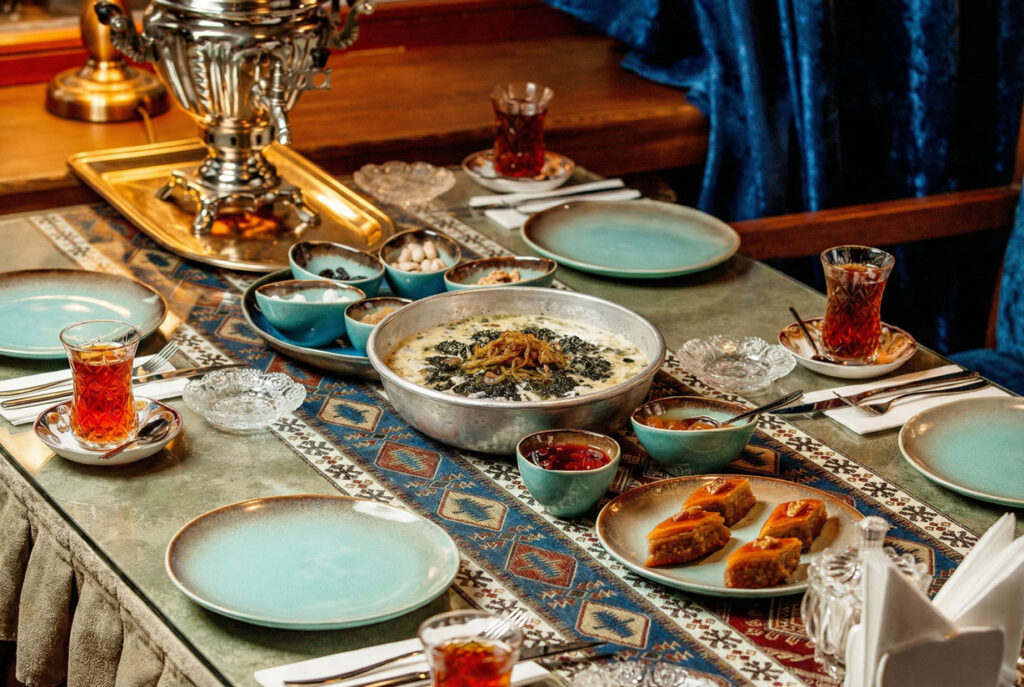
In Persian culture, winter food is not designed merely to fight the cold. It is meant to protect the body, calm the mind, and strengthen human connection. At the center of this seasonal philosophy stands Aash, the ancient and deeply symbolic Persian Aash Soup that has nourished generations through long winters.
Long before modern nutrition science, Persians understood that food could heal, balance, and comfort. Aash emerged from this cultural understanding. It is not a single recipe, but a category of soups that reflects regional diversity, agricultural rhythm, and emotional care.
At Iran Zamin Restaurant, Aash is respected not as a starter, but as a cultural meal with centuries of meaning behind it.
What Is Persian Aash Soup?
Aash is a thick, slow-cooked Persian soup made with a combination of legumes, grains, herbs, and sometimes meat. Unlike light broths, Aash is substantial. This traditional soup sustains, warms, and restores the body.
Common ingredients include lentils, chickpeas, beans, wheat or barley, onions, garlic, turmeric, herbs such as parsley, cilantro, dill, and spinach, and toppings like fried onions, mint oil, whey (kashk), or vinegar. Each ingredient is chosen not just for flavor, but for its warming and balancing properties.
People eat Aash slowly to enjoy its warmth and richness. It is filling, grounding, and emotionally soothing.
Ancient Roots of Aash in Persian History
The history of Aash dates back thousands of years. Ancient Persian texts and archaeological evidence suggest that early forms of grain-and-legume stews were common in Iran as early as the Achaemenid Empire. These early soups were practical meals for farmers, travelers, and soldiers during cold seasons.
Because Iran spans many climates, different regions prepared winter food based on climate and agriculture. However, the principle remained the same: combine what is available, cook it slowly, and create warmth from within.
Aash became the solution.
Over time, Aash evolved from survival food into ceremonial food. Persian communities served Aash not only for nourishment but also for cultural meaning.
Persian Aash Soup as Winter Medicine
Traditional Persian medicine associates winter with cold and dryness. People choose foods during winter to counterbalance those qualities. Aash does exactly that.
Legumes provide sustained energy. Herbs support digestion and circulation. Warm spices stimulate the body. Slow cooking makes the ingredients easier to digest and more nourishing.
This is why Aash is often associated with recovery from illness, postpartum care, fatigue, and emotional stress. In Persian households, when someone is unwell or overwhelmed, Aash is often the first dish prepared.
It is comfort in edible form.
Aash and Community Rituals
In addition, Aash plays an important role in Persian social life. It is deeply connected to communal cooking and generosity.
One of the most important traditions is Nazri Aash, where families prepare large quantities of Aash and distribute it to neighbors, friends, and the needy during winter months or religious occasions. This act is not charity alone. It is participation in a shared cultural responsibility.
Persian families believe cooking Aash for others brings warmth not only to the recipients, but to the household preparing it.
In this way, Aash is both food and social glue.
Regional Variations of Aash
There is no single Aash. For example, each region of Iran prepares Aash differently.
- Aash Reshteh is perhaps the most famous, made with herbs and noodles, symbolizing life paths and continuity.
- Aash-e Doogh from Azerbaijan includes yogurt and herbs, offering warmth with tangy balance.
- Aash-e Anar from central Iran uses pomegranate, blending sourness with richness.
- Aash-e Shole Ghalamkar from Tehran is complex and celebratory, often prepared for large gatherings.
Despite differences, all Aash varieties share one principle: nourishment through patience.
Why Aash Belongs to Winter
Winter in Persian culture is not rushed. It is a season of introspection, storytelling, and togetherness. Aash fits naturally into this rhythm.
It takes time to prepare. It requires stirring. It fills the home with aroma. It invites people to sit, talk, and wait.
Unlike fast meals, Aash slows life down.
As a result, Aash naturally fits into winter traditions.
Aash and Emotional Warmth
Beyond physical warmth, Aash provides emotional grounding. Its texture, aroma, and richness activate feelings of safety and familiarity. Many Iranians associate Aash with childhood memories, grandparents’ kitchens, and snowy evenings spent indoors.
Even for those new to Persian cuisine, Aash often feels instantly comforting. This is because it is built on universal principles: warmth, balance, and generosity.
Aash in Modern Persian Dining
Today, Aash remains a symbol of authenticity in Persian dining. It cannot be rushed, simplified, or industrialized without losing its soul.
When prepared properly, Aash represents a commitment to tradition and respect for cultural roots. It tells guests that the kitchen understands more than recipes. It understands meaning.
At Iran Zamin, Our chefs prepare Aash with this philosophy in mind, honoring both its nutritional value and its emotional role in Persian winter dining.