
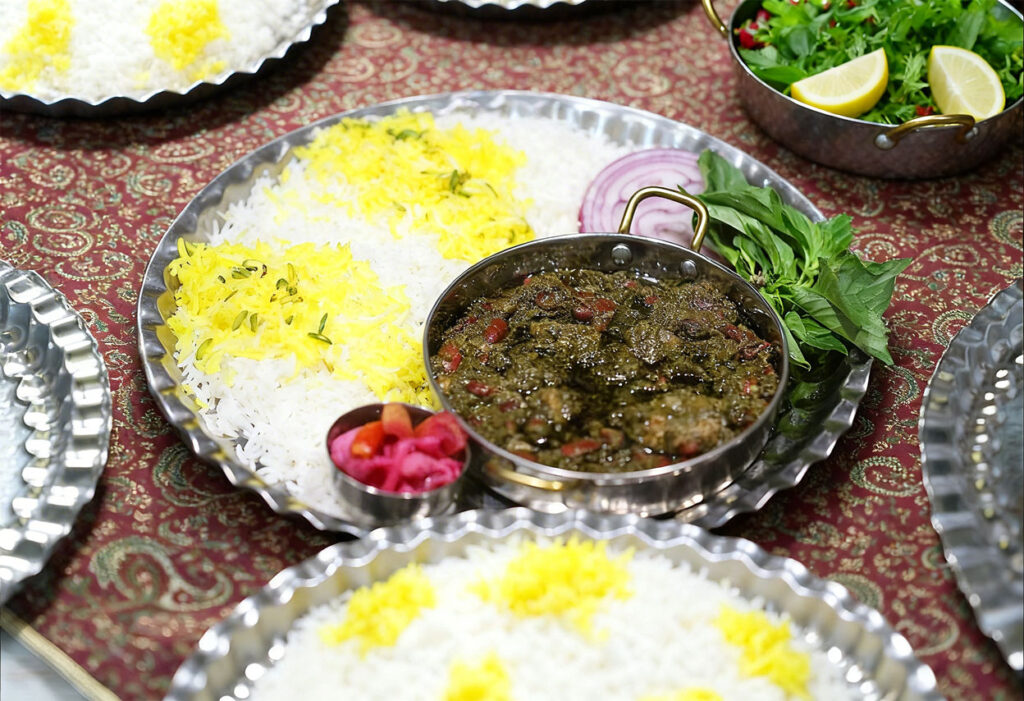
If Persian cuisine had a soul, it would live in Ghormeh Sabzi served beside a plate of perfectly steamed white rice. More than a popular dish, this pairing is a cultural symbol that defines what Persian food means to millions of people across generations.
Ghormeh Sabzi is not simply eaten. Instead, people remember it, expect it, and emotionally anticipate it. When paired with white basmati rice, it becomes the most iconic expression of Persian home cooking, tradition, and balance.
At Iran Zamin Restaurant, Ghormeh Sabzi and white rice are treated not as menu items, but as a responsibility to culture.
Why Ghormeh Sabzi Is Considered the King of Persian Stews
Ghormeh Sabzi holds a unique position in Persian cuisine. While Iran has hundreds of stews, none carries the same emotional weight.
Chefs build the dish with fresh herbs slowly sautéed to develop deep flavor, aromatic, and deeply flavorful. Parsley, cilantro, fenugreek, and scallions form the backbone. Tender beef, red kidney beans, and dried lime are added and simmered for hours. The result is rich, layered, and unmistakable.
What sets Ghormeh Sabzi apart is time. Therefore, cooks never rush its preparation. The herbs must cook long enough to lose rawness and develop depth. The dried lime must soften slowly to release acidity without bitterness. The stew improves as it rests.
Many Persians consider Ghormeh Sabzi a true test of cooking skill.
The Emotional Power of Ghormeh Sabzi
Persian families deeply associate Ghormeh Sabzi with memory and tradition. For many Iranians, its aroma instantly recalls childhood kitchens, family gatherings, and weekends at home. People living abroad often miss Ghormeh Sabzi more than any other Persian dish.
Families proudly serve Ghormeh Sabzi at important gatherings, offered to guests with pride, and prepared for loved ones who need comfort. When someone asks, “What is real Persian food?” Ghormeh Sabzi is usually the answer.
This tradition has kept the dish unchanged for centuries.
Why White Rice Matters More Than It Seems
Ghormeh Sabzi cannot exist alone. In fact, its true identity becomes complete only when paired with white Persian rice.
Persian rice is not a background ingredient. It is an art form. Long-grain basmati rice is soaked, parboiled, steamed, and rested to achieve separate, fluffy grains. The rice must be light enough to balance the richness of the stew.
White rice serves a specific purpose:
- White rice absorbs the stew without becoming heavy.
- Its clean texture highlights the deep green color of Ghormeh Sabzi.
- The rice also creates a perfect contrast between acidity and neutrality.
In Persian culture, serving Ghormeh Sabzi without proper rice would be considered incomplete.
The Cultural Philosophy Behind the Pairing
Persian culinary tradition values balance. Meanwhile, Ghormeh Sabzi delivers bold herbal flavors and bright acidity. White rice is clean, neutral, and grounding. Together, they create harmony.
This pairing reflects a larger Persian worldview:
- Strong flavors should be balanced
- Richness should be softened
- Meals should satisfy without overwhelming
The white rice allows the stew to shine while maintaining control over intensity.
A Dish That Represents Patience and Care
Ghormeh Sabzi and rice represent two parallel acts of patience. The stew simmers slowly. The rice demands attention and timing. Neither forgives shortcuts.
This is why the dish symbolizes care. When someone prepares Ghormeh Sabzi properly, it signals effort, respect, and intention. In Persian households, it is often cooked the day before because it tastes better the next day.
Good Ghormeh Sabzi is never accidental.
Regional Pride and National Identity
While variations exist across regions, the core identity of Ghormeh Sabzi remains consistent throughout Iran. This consistency has helped it become a national dish.
Unlike trend-based foods, Ghormeh Sabzi does not change to fit modern tastes. Instead, modern kitchens adapt to it. That is why it remains timeless.
Whether served in a village home or a city restaurant, the expectations are the same. And those expectations are high.
Ghormeh Sabzi in Modern Dining
Today, in contemporary Persian restaurants, chefs often judge authenticity through Ghormeh Sabzi. Guests may try kebabs first, but they evaluate the kitchen through the stew.
A well-executed Ghormeh Sabzi signals that the kitchen understands Persian cooking beyond grilling. It proves mastery of slow cooking, herb handling, and flavor balance.
At Iran Zamin, Ghormeh Sabzi is prepared traditionally, respecting both technique and meaning. The white rice served alongside it is treated with equal importance, because one cannot succeed without the other.
Why This Dish Endures
Ghormeh Sabzi and white rice endure because they fulfill more than hunger. They fulfill identity.
They remind people where they come from. They create comfort without indulgence. They carry history without nostalgia becoming outdated.
This is why Ghormeh Sabzi is often the first dish taught to the next generation. It is not just a recipe. It is inheritance.
✔ Persian families proudly cook Ghormeh Sabzi for gatherings and celebrations.
✔ Chefs carefully balance herbs, beans, and dried lime to achieve the perfect flavor.
✔ Iranian kitchens prepare this dish with patience and tradition.
✔ Generations continue to pass this recipe from parents to children.